
By Blood, by Law, by Sacred Mandate

Preface
Treaties, Compacts & Diplomatic Continuity
Hunnic Matinecock Tribal Nation
Indigenous Law • Ancestral Agreements • Continuing Relations
Treaties and compacts are solemn expressions of relationship between peoples.
The Hunnic Matinecock Tribal Nation understands these instruments first through Indigenous law—as records of diplomacy, kinship, peace, territorial responsibility, mutual obligation, alliance, and continuing relationship.
The Nation’s authority does not originate from a single treaty.
It arises through the continuity of its people, ancestry, kinship, customary law, sachemic inheritance, government, and national responsibility.
The treaties, petitions, deeds, and compacts associated with the Nation’s ancestral peoples preserve important evidence of the political world from which that continuity descends.
They demonstrate that those peoples acted through their own leaders, laws, territories, diplomatic institutions, and systems of governance.
Indigenous Diplomatic Law
Long before the creation of the United States, Indigenous peoples entered agreements through their own legal and diplomatic traditions.
These relationships were formed through:
- Council
- Kinship
- Marriage
- Adoption
- Peace-making
- Mutual protection
- Shared stewardship
- Territorial agreement
- Trade
- Confederated alliance
- Wampum and ceremonial commitment
- Successor responsibility
Written colonial instruments preserve only part of that legal history.
The absence of a surviving European document does not establish the absence of an Indigenous agreement, relationship, or legal obligation.
Where written records survive, the Nation interprets them within the Indigenous political and kinship systems that made them possible.
The Catoneras–Van Texel Kinship Compact
The Catoneras–Van Texel Kinship Compact is a foundational expression of the Nation’s continuity.
Sachem Catoneras was an Indigenous woman of the western Long Island governmental sphere who is expressly identified in the historical record as an “Indian native Sachem.”
The surviving record establishes that she possessed inherited Indigenous interests associated with Crab Meadow and that her son, Jan Cornelissen, derived his claim through his mother and her Indigenous relations.
Those interests did not originate through a colonial grant.
Through her union with Cornelius Jansen Van Texel, also recorded as Van Tassel, Catoneras carried maternal ancestry, family authority, inheritance, and successor responsibility into later generations.
The Nation uses the title Catoneras–Van Texel Kinship Compact as its institutional designation for this enduring Indigenous family, territorial, and intercultural relationship.
The title does not represent that a surviving seventeenth-century document carried that exact name.
The Compact is recognized through the cumulative record of:
- Marriage and family relationship
- Maternal inheritance
- Indigenous land interests
- Descendant succession
- Intercultural alliance
- Continuing kinship
- Family and national responsibility
The surviving colonial records corroborate this relationship.
They did not create it.
Explore the Catoneras–Van Texel Kinship Compact
Long Island and Northeastern Instruments
The Nation’s principal treaty and compact history is rooted in Long Island, the Hudson Valley, Southern New England, and the wider Northeastern Woodlands.
Relevant records include:
- Crab Meadow land and inheritance records
- Montaukett petitions associated with 1685 and 1705
- Montaukett and Long Island Indigenous deeds
- Massapequa-related land and diplomatic records
- Mattabesett and Wangunk agreements
- Narragansett diplomatic instruments
- Mohegan agreements and Crown-era proceedings
- Pequot-era treaties and postwar instruments
- Wappinger, Munsee–Lenape, and Hudson Valley diplomatic records
- Agreements associated with Indigenous–colonial relations in the seventeenth century
These instruments are preserved as evidence of:
- Indigenous ownership and stewardship
- Sachemic authority
- Family inheritance
- Political identity
- Diplomatic capacity
- Territorial relationship
- Continuing community presence
Each instrument is considered according to its own parties, language, historical setting, Indigenous legal context, and subsequent treatment.
Haudenosaunee Treaty Relations
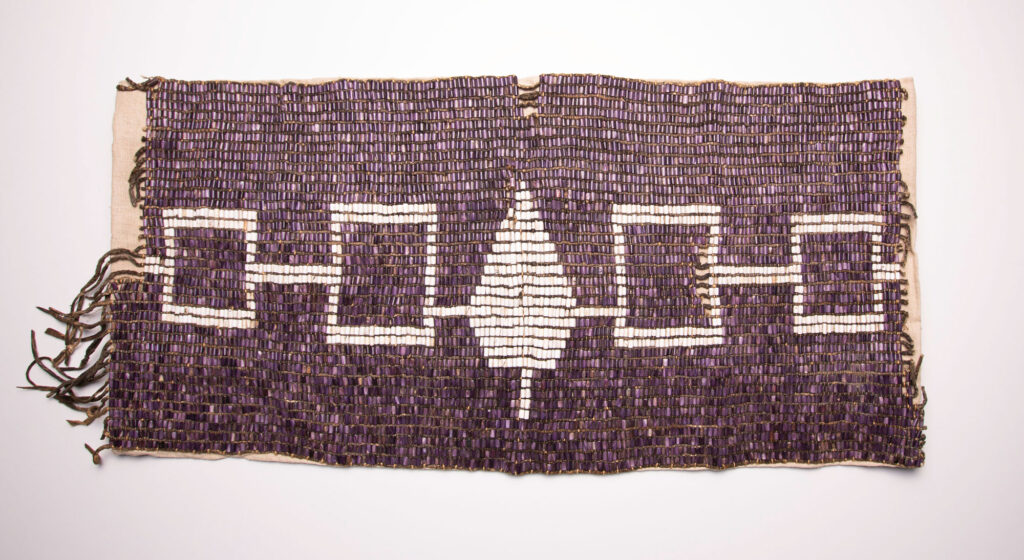
The Nation preserves Haudenosaunee-connected ancestry and kinship through documented and inherited lines involving blood relationship, marriage, adoption, alliance, and confederated history.
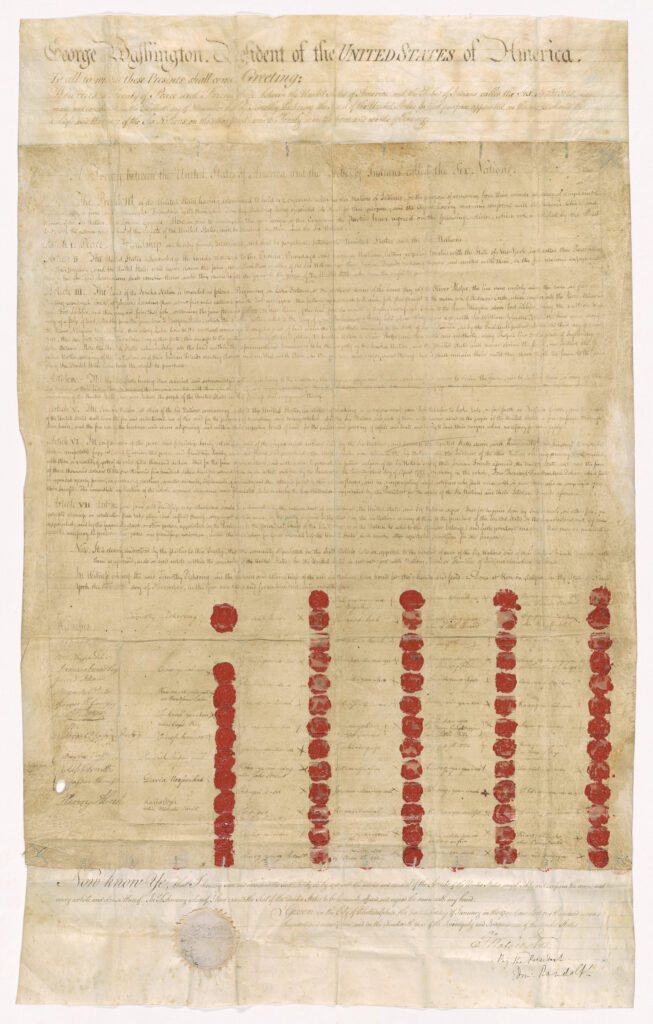
Treaties forming part of the wider Haudenosaunee diplomatic record include:
- Treaty of Fort Stanwix of 1768
- Treaty of Fort Stanwix of 1784
- Treaty of Canandaigua of 1794
The Treaty of Canandaigua records a continuing diplomatic relationship between the United States and the Six Nations and remains an important part of Haudenosaunee treaty history.
Within the Nation’s record, these treaties provide legal and historical context for the treaty-bearing peoples represented within its Haudenosaunee-connected ancestry.
They are not presented as automatically transferring every citizenship status, treaty right, governmental power, or territorial authority to every descendant.
The ancestral and kinship relationship remains significant independently.
The treaties and continuing Haudenosaunee governments add corroborative weight to the political and diplomatic world reflected within those lines.
Explore Haudenosaunee-Connected Records
Cherokee and Southeastern Treaty Relations
The Nation maintains documented Cherokee ancestry through the Davis, Price, and Smith family lines, including Dawes-era records associated with:
- Jeremiah L. Davis
- Joseph Price
- Annie C. Smith
- Related descendants
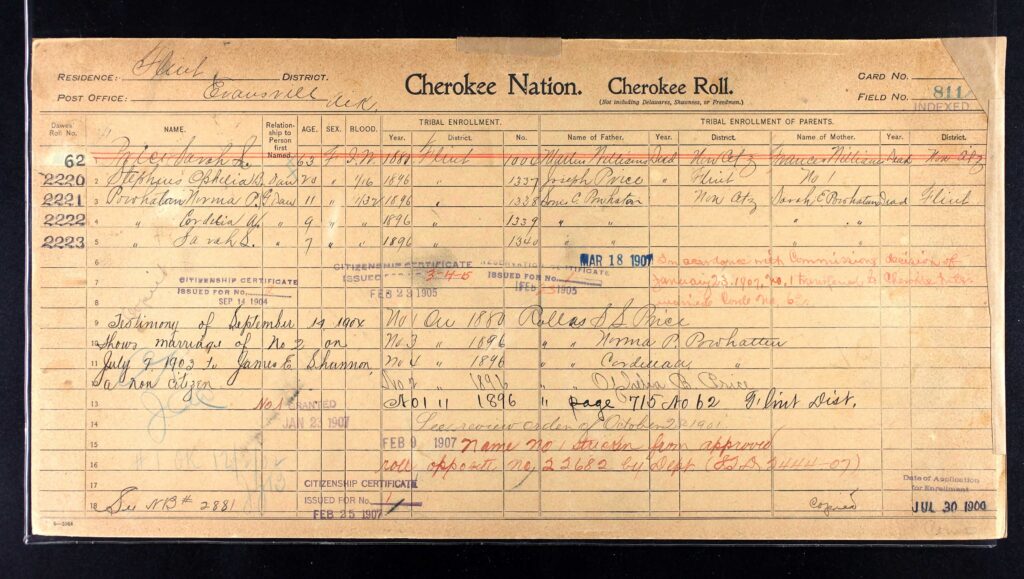
These records provide documentary support for the Nation’s Cherokee ancestral continuity.
The Nation also preserves Powhatan, Shawnee, Choctaw-connected, and associated Southeastern relationships according to the evidence supporting each line.
Treaties forming part of the Cherokee diplomatic record include:
- Treaty of Hopewell of 1785
- Treaty of Holston of 1791
- Treaty of New Echota of 1835
These instruments provide historical and legal context for the Cherokee treaty sphere represented within the Nation’s documented ancestry.
The Nation distinguishes among:
- Ancestry
- Historical community relationship
- Federal enrollment records
- Citizenship in another Indigenous nation
- Treaty interpretation
- Present governmental jurisdiction
The treaties reinforce the documented political standing of the ancestral people.
They do not replace the Hunnic Matinecock Tribal Nation’s own Indigenous foundation.
View the Cherokee and Southeastern Record
Treaty-Connected Ancestry
Treaty-connected ancestry means documented descent or kinship associated with an Indigenous people that entered a treaty, compact, petition, deed, or diplomatic agreement.
It establishes a historically significant relationship to a treaty-bearing people.
It may also provide:
- Evidence of ancestral political identity
- Context for family and community history
- Corroboration of Indigenous kinship
- Connection to an established diplomatic tradition
- A foundation for consultation, research, reconciliation, or renewed relationship
Treaty-connected ancestry is not treated as an automatic transfer of every collective right held by another nation.
The application of a particular treaty provision is considered according to:
- The treaty text
- The original parties
- Indigenous law
- The relevant ancestral relationship
- The nature of the right involved
- Continuing governmental interpretation
- Applicable legal circumstances
This approach preserves both the strength of the relationship and the distinct authority of every treaty nation.
Constitutional Treaty Principle
Within the constitutional order of the United States, ratified treaties made under federal authority form part of the supreme law of the land.
Indigenous treaties are interpreted as agreements with political peoples possessing rights before the treaties were executed.
Treaties may reserve rights already held rather than create those rights for the first time.
The continued force and application of a particular treaty depend upon its text, parties, subsequent law, and governmental interpretation.
The Nation therefore maintains its treaty record with precision.
It identifies each instrument according to the people involved and the relationship it bears to the Nation’s ancestry, kinship, history, or government.
The detailed legal treatment of treaty principles is maintained on the Nation’s Sovereign Standing, Recognition & Jurisdiction page.
Modern Compacts and Agreements
The Nation continues the Indigenous practice of diplomacy through modern agreements with governments, institutions, universities, humanitarian organizations, Indigenous communities, and responsible international partners.
Modern instruments may include:
- Memoranda of understanding
- Strategic alliance agreements
- Cultural cooperation agreements
- Educational partnerships
- Humanitarian compacts
- Environmental stewardship agreements
- Media and communications agreements
- Health and development partnerships
- Youth and sporting initiatives
- Research and knowledge-protection agreements
Each modern agreement is entered according to:
- Sovereign equality
- Mutual respect
- Non-subordination
- Reciprocity
- Defined responsibilities
- Free, prior, and informed consent
- Indigenous data sovereignty
- Protection of names, seals, and cultural property
- Continuing accountability
No modern partnership absorbs the Nation into another institution or places its government under outside control unless the Nation expressly and lawfully agrees to a defined arrangement.
View Alliances and Partnerships
Treaty and Compact Recordkeeping
The Nation maintains records of relevant treaties, petitions, deeds, compacts, and modern agreements through its governmental and historical archives.
Records may be classified as:
Foundational Instrument
An agreement or relationship forming part of the Nation’s own historical continuity.
Ancestral Treaty
A treaty entered by an Indigenous people represented within the Nation’s documented ancestry.
Kinship or Confederated Compact
A relationship formed through marriage, adoption, alliance, reciprocal protection, or confederated law.
Historical Diplomatic Record
A deed, petition, council record, correspondence, or other instrument documenting Indigenous political activity.
Modern Governmental Agreement
A memorandum, compact, contract, or alliance formally entered by the present Nation.
Treaty-Connected Record
A record that provides legal or historical context for an ancestral relationship without being represented as a direct transfer of another nation’s collective authority.
These classifications preserve clarity concerning the nature and weight of each instrument.
Supporting Records
The Nation’s supporting treaty documentation is maintained through:
- Public archives
- Government repositories
- Deeds and land records
- Petitions
- Treaty texts
- Enrollment records
- Family records
- Genealogical documentation
- Historical research
- Nation-held archives
Selected public records may be displayed on the website.
Additional documents may remain in secured archives to protect:
- Personal information
- Family records
- Indigenous data
- Cultural knowledge
- Unpublished research
- Archival integrity
- Protected legal materials
A representative Dawes enrollment record may be displayed as corroborative evidence of the documented Cherokee line.
The remaining enrollment cards and supporting genealogical records are maintained within the Nation’s Historical Documentation & Public Records archive.
View Historical Documentation & Public Records
Statement of Diplomatic Continuity
The Hunnic Matinecock Tribal Nation maintains treaty and compact relationships as part of a living Indigenous diplomatic tradition.
Its authority is not assembled from unrelated treaties.
Its standing is not borrowed from the recognition of another Indigenous nation.
Its treaty-connected relationships demonstrate that its ancestral lines existed within a broad political world of Indigenous nations, sachems, councils, confederacies, and diplomatic agreements.
Those relationships add historical, political, and legal weight while preserving the distinct authority of every people involved.
The Nation honors the agreements of the ancestors.
It maintains its own compacts in the present.
It carries the responsibilities of diplomacy forward.
Indigenous Law. Continuing Relations. Living Responsibility.
Reservation of Rights
Nothing on this page shall be interpreted as:
- A waiver of sovereign immunity
- A surrender of jurisdiction
- An abandonment of ancestral or treaty-connected position
- A claim to control another Indigenous nation
- An automatic assertion of every right belonging to another treaty party
- Consent to an outside forum
- A limitation upon the Nation’s Indigenous law or governmental authority
All rights, relationships, interpretations, claims, remedies, and governmental positions are expressly reserved.